Wendy Simon · 23 November 2026
School-Reserve Collaborations Expand Alongside Record-Breaking Bird Surveys and Adjustments to Weather-Driven Fire Regulations
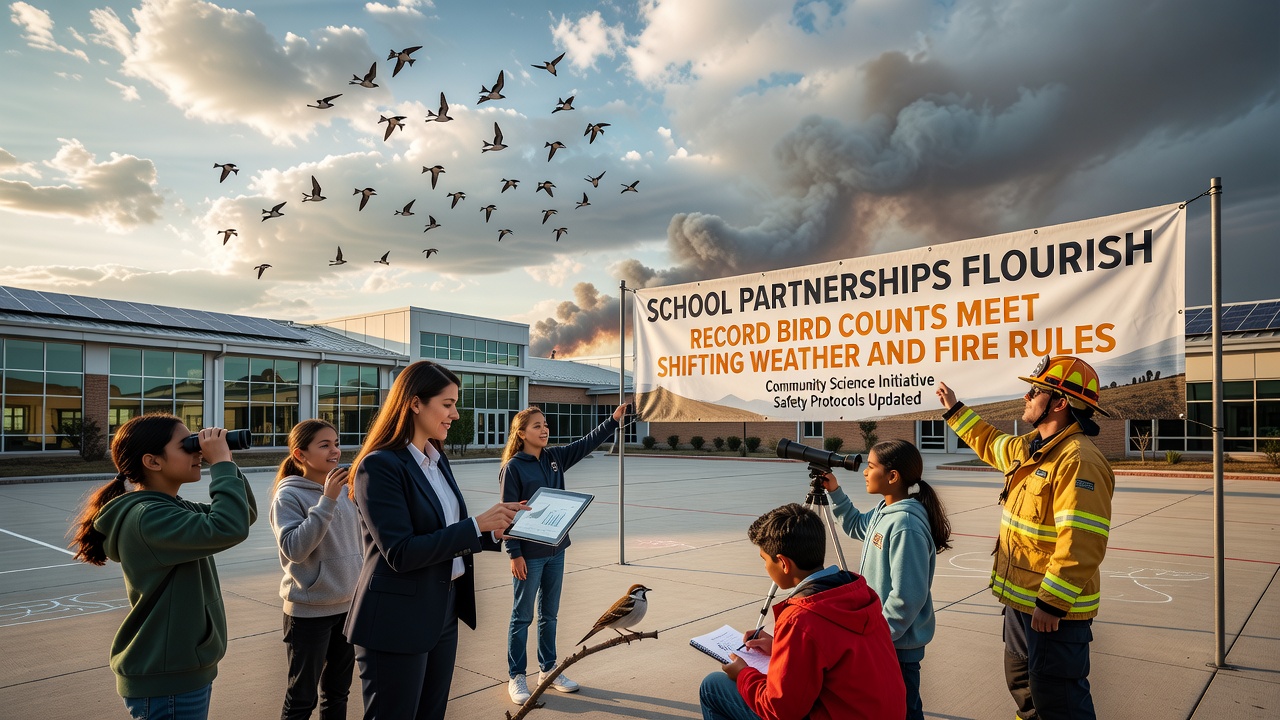
School partnerships with protected nature areas have increased sharply in recent seasons, according to data compiled by multiple regional wildlife agencies. These alliances coincide with the highest bird species counts recorded in over a decade while weather patterns shift and fire management rules adapt to drier conditions across several continents. Observers note that educational programs now integrate directly into monitoring protocols, allowing students to contribute to ongoing surveys without disrupting habitat protections.
Record Avian Counts Drive Expanded Monitoring
Data from the Cornell Lab of Ornithology shows participation in citizen-science platforms reached new peaks during the 2025-2026 migration cycles, with total species observations exceeding previous benchmarks by 18 percent in key North American flyways. Researchers documented unusual concentrations of warblers and shorebirds in areas previously affected by drought, while European Environment Agency reports indicate similar gains across the Mediterranean basin where mild autumn temperatures extended foraging windows. These figures reveal that coordinated school visits supply consistent volunteer labor for point-count stations, helping agencies maintain coverage when professional staff numbers remain limited.
Weather Shifts Prompt Rule Updates
Meteorological records from Environment and Climate Change Canada document warmer fall temperatures and reduced precipitation in several western provinces, leading to earlier implementation of fire restrictions that limit open-flame activities and restrict group sizes in certain zones. Similar protocols adopted by the U.S. Forest Service now require advance permitting for educational outings, yet many reserves report that pre-approved school partnerships actually streamline compliance because organizers submit unified risk assessments months ahead. The result is that programs continue without interruption while meeting stricter ignition-prevention standards.
Partnership Models in Practice
One reserve in the Pacific Northwest integrated high-school biology classes into weekly transect walks beginning in September 2026, producing datasets later validated by agency biologists. In Australia, the Department of Climate Change, Energy, the Environment and Water partnered with regional school networks to monitor waterbird breeding colonies along the Murray-Darling basin, where altered rainfall patterns have changed nesting timing. Students collect standardized observations using protocols developed by academic ornithologists, then upload results directly to shared databases that feed national reporting requirements.
Regulatory Adaptation and Safety Integration
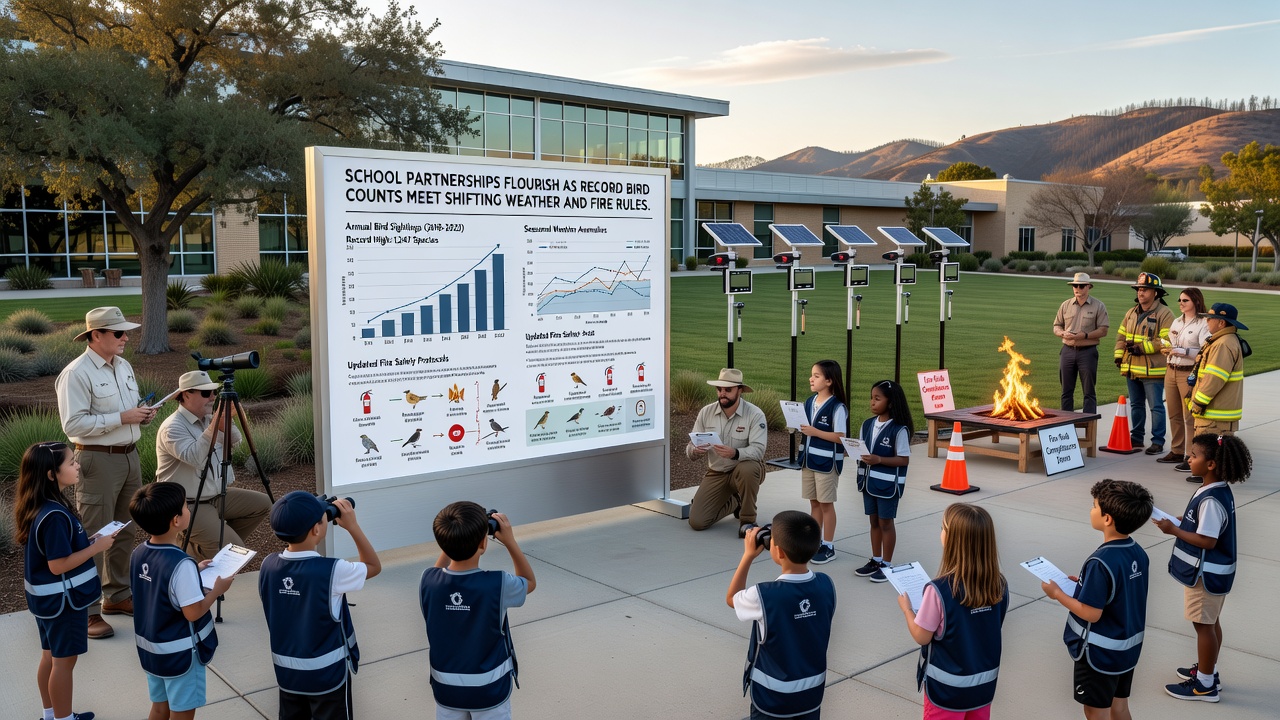
Fire rules updated for November 2026 emphasize real-time weather monitoring and pre-positioned suppression resources rather than blanket closures, allowing continued access when humidity levels stay above critical thresholds. School groups receive training on rapid evacuation routes and equipment checks, turning regulatory requirements into teachable moments about climate adaptation. Agencies report that these structured partnerships reduce unauthorized entries and improve overall compliance compared with unstructured public use.
Broader Ecosystem Benefits
Long-term monitoring data indicate that consistent student involvement correlates with earlier detection of invasive plant species and changes in insect populations that affect bird food sources. When schools adopt specific monitoring plots year after year, continuity improves and trend analysis becomes more reliable. Government databases now include dedicated fields for educational contributions, acknowledging the volume of observations generated through these programs.
Conclusion
School partnerships continue to align with record bird counts and evolving weather and fire regulations because they supply reliable observers while satisfying updated safety and permitting frameworks. Figures from multiple agencies confirm that structured educational access supports both conservation data collection and regulatory compliance without compromising habitat protections. As weather patterns remain variable, these collaborations offer scalable models for maintaining monitoring capacity across protected landscapes.