Greta Simmons · 26 October 2026
Regional Nature Sites Adjust Seasonal Programs Amid Shifting Climate Patterns
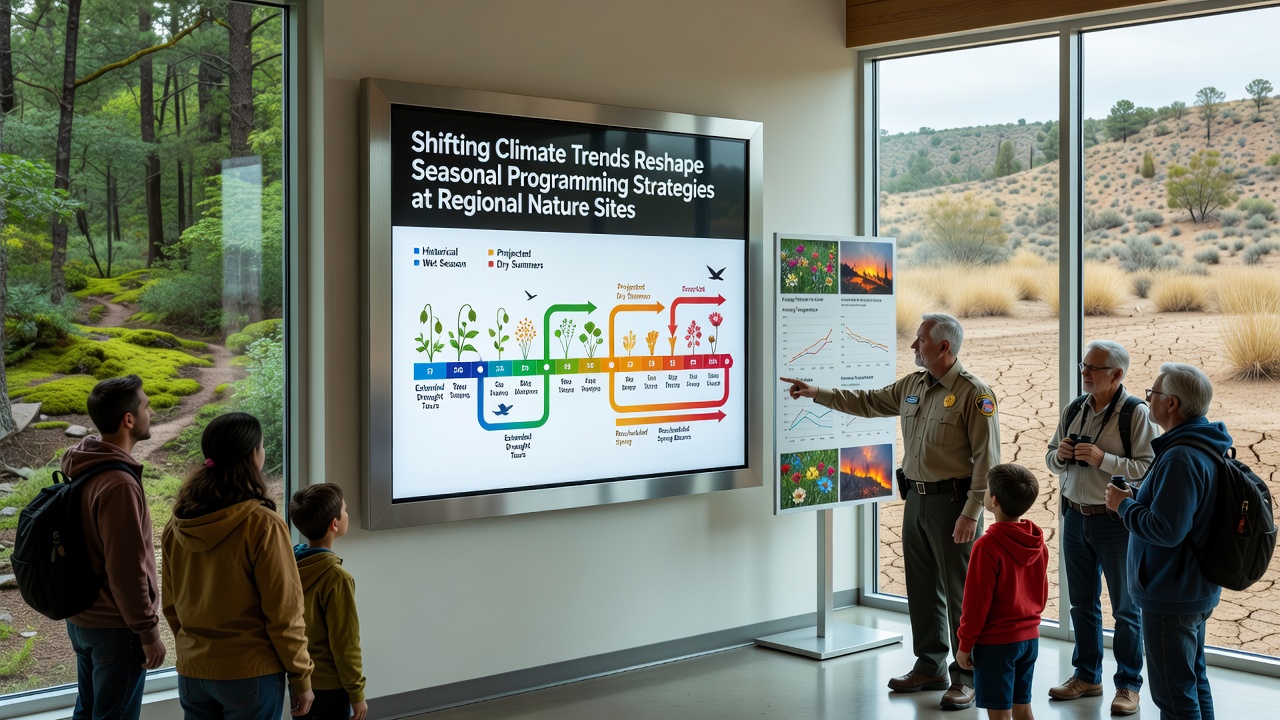
Climate records indicate that average temperatures have risen across multiple regions since the late twentieth century, and this shift has altered the timing of seasonal events at nature sites including parks, reserves, and wildlife centers. Data from monitoring stations show earlier onset of spring conditions in many temperate zones, while fall transitions occur later in the calendar year. Those who manage these locations have responded by revising activity calendars, trail access rules, and educational offerings to align with observed environmental changes.
Observed Changes in Seasonal Timing
Studies compiled by government agencies reveal that spring wildflower blooms and bird migrations now occur weeks earlier in parts of North America and Europe compared with records from the 1990s. Summer heat waves extend further into September in some areas, whereas winter snow cover has shortened by an average of two to three weeks in northern latitudes. Observers note that these adjustments affect visitor patterns, with peak attendance shifting away from traditional holiday periods toward shoulder seasons when conditions remain comfortable for outdoor exploration.
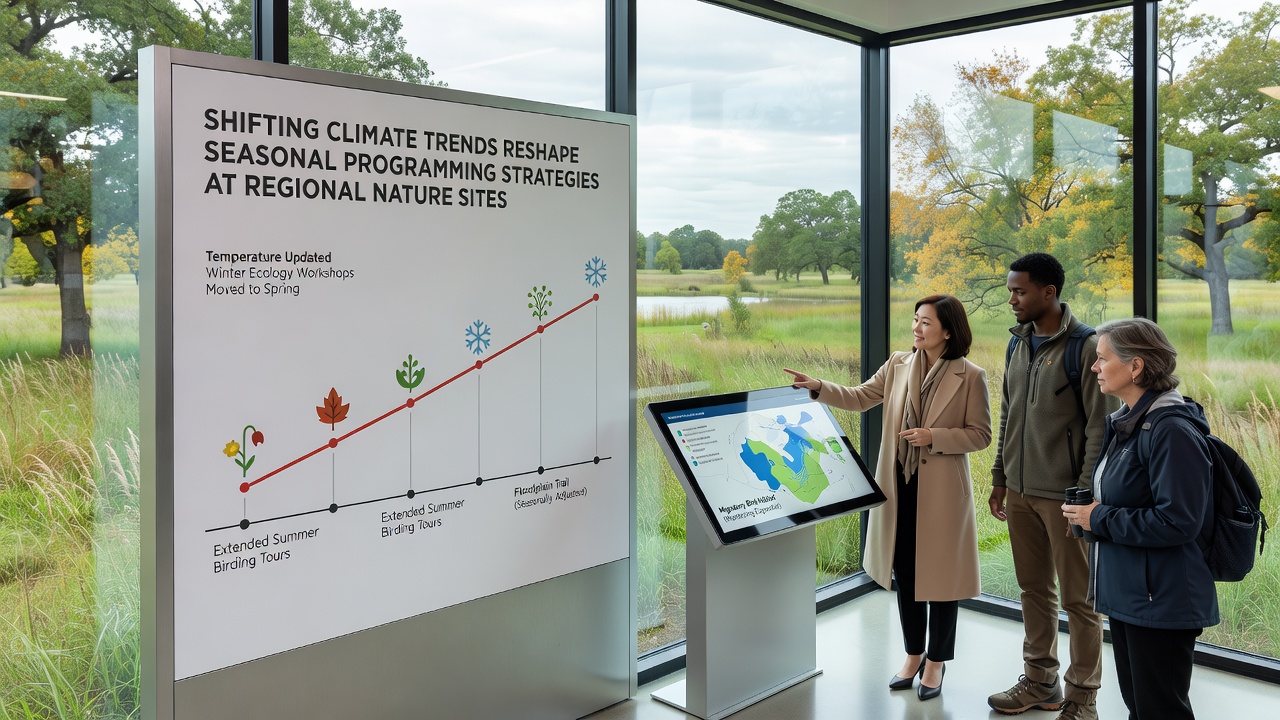
Regional nature sites have documented corresponding impacts on programming. Guided hikes focused on spring ephemerals require rescheduling to March or early April in several Midwest and Northeast locations, while fall foliage tours extend into November because leaf color changes persist longer under milder temperatures. Staff at these facilities coordinate with meteorological services to update event dates each year based on temperature and precipitation forecasts rather than fixed calendar dates.
Adaptations in Activity Planning
Site managers have introduced flexible scheduling systems that allow programs to move forward or backward by several days depending on weather data. Water-based activities such as canoe tours and shoreline surveys now operate under revised temperature thresholds because earlier ice melt and later freeze dates have extended open-water seasons. Educational workshops on pollinator habitats incorporate real-time observations of species arrival dates, which have advanced by an average of 10 to 15 days since 2000 according to long-term monitoring networks.
Lighting and safety protocols for evening programs have also changed. Extended daylight during transitional months reduces the need for artificial illumination at some facilities, while increased storm frequency prompts additional shelter installations and cancellation policies tied to wind and precipitation alerts. Those who coordinate volunteer events report higher participation rates when sessions align with milder shoulder-season conditions rather than peak summer heat.
Data Sources and Regional Examples
Records maintained by the National Oceanic and Atmospheric Administration show measurable shifts in growing season length across the contiguous United States, with implications for habitat management and visitor access planning at federally and state-managed properties. Similar patterns appear in European datasets compiled through the European Environment Agency, where spring advancement and autumn delay have prompted nature reserves in Scandinavia and the Alps to modify trail maintenance schedules and wildlife monitoring windows. Canadian provincial parks have likewise adjusted winter recreation offerings because consistent snowpack arrives later and departs earlier than historical averages.
One study tracking visitor statistics at multiple reserves found that attendance during traditional peak summer months declined modestly in regions experiencing prolonged heat advisories, while spring and fall visits increased. Programming teams responded by expanding interpretive programs on climate indicators, including phenology tracking and citizen science projects that collect data on plant and animal responses. These initiatives provide measurable records that feed back into future scheduling decisions.
Operational Adjustments Across Sites
Facilities have updated equipment inventories to include additional shade structures and hydration stations for warmer shoulder seasons. Trail crews apply more frequent maintenance during extended dry periods that increase erosion risk, and winter equipment such as snow grooming machinery sees reduced annual usage hours. Coordination with local emergency services has intensified around revised storm seasons, with communication protocols now emphasizing real-time alerts rather than fixed seasonal briefings.
Partnerships with academic institutions supply ongoing data streams that support these operational shifts. Researchers supply forecasts for temperature anomalies and precipitation trends that allow sites to project activity windows several months ahead. This approach replaces rigid seasonal templates with dynamic calendars that reflect current environmental conditions.
Conclusion
Regional nature sites continue to refine their seasonal programming in response to documented climate trends that alter temperature ranges, precipitation timing, and species activity windows. Government monitoring programs and site-level records supply the factual basis for these adjustments, which include rescheduled events, revised safety measures, and expanded citizen science components. As temperature and seasonal data accumulate through 2026 and beyond, managers at these locations maintain records that track both environmental indicators and corresponding changes in visitor engagement patterns.